

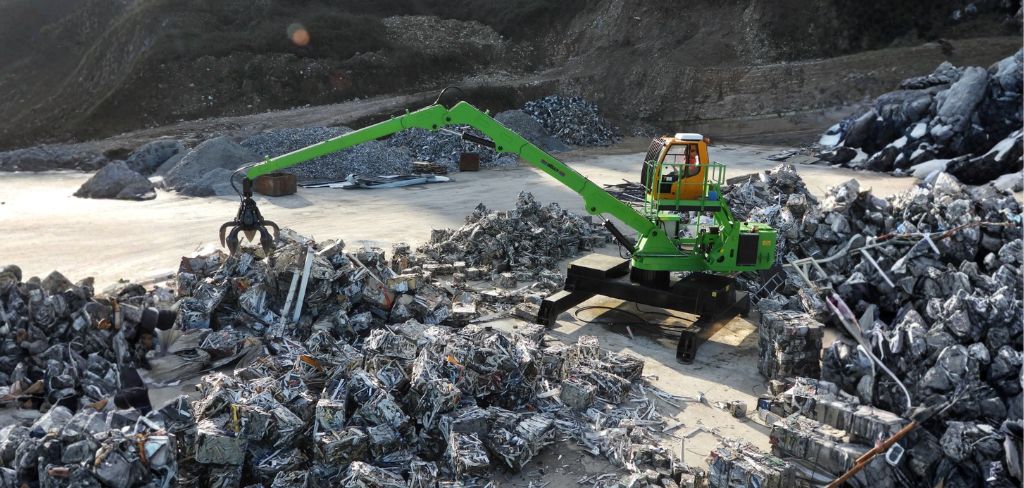
1- SCRAP SORTING
Where Profitability Begins
We design scrap procurement lines with optimum capacity, preventing unnecessary investment costs from the very start.
2- MELTING
The Right Furnace, Minimum Loss
We prevent idle investment by sizing furnace capacities based on your realistic production targets rather than vendor suggestions.
3- INGOT CASTING
Value Beyond Standards
We increase your market competitiveness by establishing production systems that ensure consistent alloy quality in secondary aluminum.
4- BILLET CASTING
Flow That Cuts Through Bottlenecks
By optimizing factory layout, we shorten material travel between stations and eliminate production bottlenecks.
5- EXTRUSION
Maximum Output, Optimum Press
Instead of oversized machinery, we independently select the extrusion press best suited to your specific production targets and profile types.
6- COOLING, PULLING,CUTTING & AGING
Operational Excellence
We don't just build the facility; we prepare your team for long-term, error-free production through operator training and Standard Operating Procedures (SOPs).
Completed Reference Facilities
FROM SCRAP TO PRECISION METAL. WE BUILD PLANTS
We guide aluminium industry investors from concept to commercial production — turning capital into optimized, profitable manufacturing operations across secondary aluminium recycling and extrusion.
Our Vision
To protect investor capital from the structural mistakes that derail aluminium manufacturing projects, ensuring optimized factory design and realistic investment sizing from day one.
Our Mission
- Deliver end-to-end investment advisory.
- Drive process improvement and yield optimisation.
- Transfer expert knowledge to in-house teams.

Founder
- The Core Problem
Most aluminium plant
investments start wrong
-
Wrong equipment selection
We work exclusively for you — the owner. Every decision protects your investment, timeline, and budget. No conflicts of interest.
-
Poor factory layout design
Production flow that forces material to travel unnecessary distances, creating bottlenecks, safety hazards, and permanent inefficiency.
-
Mismatched investment sizing
CapEx that does not align with realistic market volume projections, resulting in idle capacity and poor return on investment.
-
No operational readiness
Plants built without defined quality systems, organisational structures, or operating procedures — resulting in chaotic ramp-up.
- What We Bring
Deep technical expertise,
Practical results.
Our consultancy is built on hands-on knowledge of aluminium manufacturing — not theoretical frameworks. We have lived the investment cycle and production challenges that aluminium plant owners face.

Expert
Knowledge

Specialist technical knowledge of secondary aluminium metallurgy, scrap chemistry, furnace operations, casting, extrusion press mechanics, die design, and finishing processes.
Training & Knowledge
Transfer

Structured training programs for plant operators, production supervisors, and quality teams — building lasting in-house capability that reduces dependence on external consultants.
Investment
Advisory

Independent investment guidance from concept through to commercial operation — protecting investor capital from the structural mistakes that derail aluminium manufacturing projects.
Aluminium Recycling Consultancy for Investors and Industrial Groups
For investors and industrial groups across the GCC, Aluminium Recycling has moved from a peripheral activity into one of the most defensible segments in the entire metals value chain. The drivers are structural rather than seasonal: regional energy economics, tightening sustainability mandates from global brand owners, and a domestic scrap pool finally large enough to support viable Secondary Aluminium Production at competitive scale. For a first-time investor, the relevant question is rarely whether to enter the sector — it is how to enter it without committing capital to the wrong configuration.
Designing a Profitable Aluminium Scrap Recycling Operation
A serious Aluminium Scrap Recycling project lives or dies on three early decisions: the quality and consistency of feedstock, the choice of melting and refining technology, and the discipline applied to operating cost. Aluminium Remelting looks deceptively simple on paper, but the distance between a profitable plant and a stranded asset usually comes down to how well these three layers are designed against one another. This is where independent advisory creates measurable value — not in selling equipment, but in stress-testing the assumptions behind a feasibility study before any purchase order is signed.
Aluminium Recovery Solutions Built for the Circular Economy
Modern Aluminium Recovery Solutions are no longer judged only on melt yield. Downstream buyers — particularly automotive, packaging, and construction customers tied into the wider Aluminium Circular Economy — increasingly demand documented carbon intensity, alloy traceability, and reliable delivery windows. A Sustainable Aluminium Production strategy is therefore not a marketing posture; it is a precondition for the offtake contracts that anchor project bankability. Plants designed without this lens are visibly losing margin to competitors who built it in from day one.
From Aluminium Scrap Processing to a Bankable Recycling Plant
On the operational floor, the value chain begins with Aluminium Scrap Processing — sorting, decoating, shredding, and density-based separation. Each step determines what enters the furnace and, by extension, what comes out. Investors evaluating an Aluminium Recycling Plant should resist the temptation to over-specify melting capacity while under-investing in pre-treatment; this is the single most common configuration error encountered in greenfield projects across the region. Advances in Aluminium Recycling Technology — laser sorters, sensor-based separation, more efficient rotary and tilting furnaces, closed-loop dross handling — have shifted the boundary of what is technically and economically possible, but they also demand sharper commercial judgement to deploy correctly.
Aluminium Scrap Trading, Supply, Export and Import Strategy
The commercial layer is equally consequential. Aluminium Scrap Trading is a global business of thin margins and concentrated counterparty risk, and a plant's procurement model effectively defines its profitability. Producers of Secondary Aluminium Ingot need a structured Aluminium Scrap Supply plan that blends domestic collection, regional partnerships, and disciplined exposure to Aluminium Scrap Import flows. For groups holding surplus material — particularly in markets where local melting capacity is still limited — Aluminium Scrap Export can also form part of the early-stage strategy, provided trade lanes, tariffs, and quality specifications are properly understood.
Post-Consumer and Industrial Aluminium Recycling: Choosing the Right Feedstock Mix
Feedstock segmentation deserves the same scrutiny. Post-Consumer Aluminium Recycling, drawing from used beverage cans, end-of-life vehicles, and demolition materials, behaves very differently in cost and quality terms compared with Industrial Aluminium Recycling, which captures extrusion offcuts, stamping skeletons, and process scrap closer to its alloy of origin. A well-designed plant is built around a deliberate mix of the two — not a generic "we will melt anything" intake that almost always erodes margin over time.
Aluminium Dross Processing, Salt Slag Processing and the Modern Recovery Plant
Residue management is the dimension most often underestimated in early feasibility work. Aluminium Dross Processing recovers metal that would otherwise be lost from the furnace cycle, and properly integrated, it can shift a project's economics by several percentage points. Salt Slag Processing — closing the loop on the saline by-product of rotary furnace operations — is increasingly treated by regulators and offtake buyers as a non-negotiable, not an optional add-on. An Aluminium Recovery Plant that handles dross and salt slag internally, or through structured partnerships, is simply a more financeable plant than one that does not.
The strategic conclusion is consistent across every project we have advised on: aluminium recycling rewards precision in design and discipline in execution far more than scale alone. The role of an experienced consultancy is to translate that principle into the specific capex, technology, and commercial decisions that determine whether a project becomes a long-term cash generator or a costly lesson — and to do so before, not after, the foundations are poured.
Aluminium Foundry Consultancy: From Furnace Selection to Bankable Casting Operations
Building or expanding an Aluminium Foundry is one of the most capital-intensive decisions an industrial group will make in the metals sector — and one of the least forgiving. Unlike rolling or extrusion, where downstream flexibility can compensate for early design errors, a foundry's profitability is largely locked in the moment the furnace, casting line, and melt treatment architecture are specified. Independent advisory at this stage is not a luxury; it is the difference between a plant that compounds value over twenty years and one that requires costly retrofits within five.
Aluminium Casting: Choosing the Right Product Strategy Before the Equipment
Every successful foundry begins with a clear answer to a deceptively simple question: what exactly will the plant cast, and for whom? Aluminium Casting covers a spectrum of product formats, each with distinct equipment, alloy, and market implications. Aluminium Ingot Casting serves remelters, die-casters, and traders who need standardized, easily transportable units. Aluminium Billet Casting targets extrusion plants and demands far tighter control over alloy chemistry, homogenization, and surface quality. Aluminium Sow Casting, often overlooked in early planning, is the practical workhorse for plants supplying large-volume secondary smelters and recyclers. Defining the product mix before specifying the line — rather than the other way around — is the single most important commercial discipline in foundry design.
Aluminium Alloy Production and Melting Furnace Selection
Aluminium Alloy Production is where metallurgy and economics meet, and where the choice of Aluminium Melting Furnace determines both. Each furnace family carries a distinct cost-yield-quality profile that must be matched against the intended scrap mix and product specification. Rotary Furnace Technology remains the standard for processing lower-grade and contaminated scrap with high recovery rates, particularly when salt flux is used. The Tilting Rotary Furnace has progressively replaced fixed-axis designs in modern plants, offering safer tapping, reduced salt consumption, and significantly better operator ergonomics — advantages that show up directly on the operating cost line. The Reverberatory Furnace, by contrast, is the natural choice for cleaner feedstock and higher-throughput alloy production, where holding capacity and metallurgical control matter more than aggressive scrap recovery. Selecting between these architectures — or combining them — is rarely a technical decision alone; it is a commercial one.
Aluminium Casting Line Design and Foundry Engineering
A modern Aluminium Casting Line is no longer a sequence of independent machines but an integrated system whose throughput is defined by its weakest link. Sound Foundry Engineering begins with a realistic mass-and-energy balance and ends with detailed layout decisions that protect both safety and yield. The mistake we encounter most often in feasibility reviews is over-investment in headline equipment paired with under-investment in the auxiliary systems that actually govern uptime. Credible Foundry Solutions address the line as a whole — from charging to casting to cooling — and explicitly plan for the bottlenecks that will emerge once the plant is operating at design capacity, not at commissioning load.
Foundry Equipment, Machinery and the Case for Automation
Capital decisions around Foundry Equipment deserve the same scrutiny as any other major industrial investment. The temptation to specify premium machinery across every station rarely survives a disciplined ROI analysis; equally, cutting corners on critical safety or quality stations almost always proves more expensive than the savings suggest. Selection of Foundry Machinery should follow the product strategy and the realistic labour environment of the site, not a generic best-practice template imported from a different market. Foundry Automation is increasingly the lever that separates competitive plants from marginal ones — not as a wholesale replacement for operators, but as a targeted investment in the stations where human variability most directly damages yield, energy consumption, or safety performance.
Aluminium Melt Treatment and Molten Metal Handling
Once the metal is liquid, the foundry's economics are decided in minutes rather than hours. Aluminium Melt Treatment is the discipline that converts raw molten metal into a casting-ready alloy of predictable chemistry and cleanliness, and it is where many otherwise well-designed plants quietly underperform. Safe and efficient Molten Aluminium Handling — covering transfer ladles, tilting practices, and launder design — protects both the workforce and the metallurgical quality built up at the furnace. Degassing Systems remove dissolved hydrogen that would otherwise create porosity in the final product, and modern rotary degassers have made what was once a craft into a measurable, repeatable process. Filtration Systems for Aluminium, whether ceramic foam or bed filtration, complete the cleanliness chain and are increasingly demanded by downstream customers as a documented quality control step rather than an internal practice. Fluxing Technology ties these elements together, optimizing inclusion removal, dross behaviour, and furnace life simultaneously — a single area where the right specification can pay back its capex within a single financial year.
Aluminium Launder Systems, Ingot and Billet Casting Technology
The final stretch of the foundry is where quality is either preserved or quietly lost. Aluminium Launder Systems govern how cleanly and steadily molten metal travels from furnace to mould, and even small thermal or geometrical inefficiencies translate into measurable yield loss across a year of operation. An Ingot Casting Machine must be matched to the realistic throughput, alloy range, and labour model of the plant rather than to its peak theoretical capacity; oversized machines waste energy and floor space, while undersized ones become the permanent bottleneck of the operation. Billet Casting Technology, particularly modern direct-chill systems with hot-top moulds and air-slip refinements, has advanced significantly in the last decade — but the value of these advances depends entirely on how well they are integrated with upstream melt treatment and downstream homogenization. As with every other stage of foundry design, the right answer is rarely the most expensive option; it is the one that is correctly matched to the plant's product strategy and operating context.
The pattern across every foundry project we have advised on is consistent: the plants that perform are not the ones with the largest budgets, but the ones whose furnace, casting line, melt treatment, and automation decisions were made together, in sequence, and against a clearly defined commercial objective. The role of an independent consultancy is to enforce that discipline before capital is committed — and to ensure that each decision strengthens, rather than constrains, the ones that follow.
Aluminium Extrusion Consultancy: Designing Bankable Profile Manufacturing Operations
Aluminium Extrusion is the segment of the aluminium value chain where engineering precision and commercial discipline are tested most directly. The technology is mature, the equipment is widely available, and yet the gap between the most profitable extruders and the marginal ones remains striking. That gap is rarely a function of press tonnage or plant size — it is almost always a function of decisions made years earlier, when the billet strategy, product mix, and downstream capabilities were first defined. Independent advisory at that stage is what separates an extrusion plant designed to compete for decades from one built to chase whichever order arrives first.
Aluminium Extrusion Billet: The Foundation of Profile Quality
Every profile a plant ever produces is bounded by the quality of the metal that enters the press. Aluminium Extrusion Billet is therefore not a procurement line item but a strategic input that defines yield, surface quality, and the alloys a plant can credibly offer to the market. Extrusion Grade Billets must meet tight specifications on chemistry, homogenization, and internal soundness, and an extruder's ability to enforce those specifications — whether through in-house casting or through disciplined supplier qualification — sets the practical ceiling on what the rest of the plant can achieve. Many of the recurring quality problems we are asked to diagnose in operating plants trace back not to the press or the die shop, but to inconsistent billet entering the line in the first place.
Aluminium Profiles and the Product Mix Decision
Aluminium Profiles are not a single market but a portfolio of distinct sub-markets, each with its own pricing logic, quality threshold, and competitive landscape. A serious Aluminium Profile Manufacturing strategy begins with an honest segmentation of those sub-markets and a clear-eyed view of where the plant can credibly win. Plants that try to serve every segment with a generic capability set almost invariably underperform those that build a deliberate, narrower position — typically anchored on either high-volume standardized output or on technically demanding, higher-margin specialties. The product mix decision is, in practice, the single most consequential commercial decision an extruder makes, because it silently determines press selection, die strategy, finishing investment, and the entire downstream cost structure.
Aluminium Semi-Finished Products and Position in the Value Chain
Extruders occupy a particular position in the Aluminium Value Chain — converting cast billet into Aluminium Semi-Finished Products that other manufacturers then transform into finished goods. That intermediate position is both an opportunity and a structural risk. The opportunity lies in the leverage extrusion creates: a relatively small operation can serve a wide range of downstream industries, from construction to transportation to consumer goods. The risk lies in margin compression from both ends, as billet costs rise and downstream customers consolidate. A plant that does not understand its precise position in the value chain — and the bargaining power that flows from it — will struggle to defend pricing regardless of how well the press itself is run.
Industrial and Architectural Aluminium Profiles: Two Different Businesses
Within the broader profile market, two distinct commercial models deserve to be treated as separate businesses rather than variations of the same one. Industrial Aluminium Products — heat sinks, transportation components, machinery profiles, energy and electrical applications — are sold against tight technical specifications, often to sophisticated engineering customers who reward consistency, traceability, and engineering support far more than headline price. Architectural Aluminium Profiles — window and façade systems, curtain walls, structural framing — operate in a different rhythm, driven by construction cycles, surface finish requirements, and certification regimes that vary by market. A plant designed and managed for both segments simultaneously, without explicitly separating their operating logic, almost always ends up under-serving both. Recognizing them as different businesses is the first step toward configuring each properly.
Extrusion Plant Solutions and the Role of Aluminium Extrusion Consulting
Modern Extrusion Plant Solutions are no longer judged on press capacity alone, but on how coherently the entire chain — billet casting and heating, press and handling, stretching, sawing, ageing, surface treatment, and packing — has been engineered around a defined product strategy. The most expensive errors we encounter are rarely individual equipment choices; they are misalignments between stages, where a high-performance press is throttled by undersized ageing capacity, or where a sophisticated finishing line sits idle because the upstream alloy mix never justified it. This is precisely where Aluminium Extrusion Consulting creates measurable value: not in specifying any single machine, but in ensuring that the entire plant is configured as one coherent system, sized to a realistic commercial plan, and resilient to the market shifts that will inevitably occur during its operating life.
The conclusion is consistent across every extrusion project we have advised on: the plants that compound value over time are those whose billet strategy, product mix, and plant configuration were defined together, in sequence, and against a clearly understood position in the aluminium value chain. The role of an independent consultancy is to enforce that discipline before capital is committed — and to translate it into the specific decisions on which long-term competitiveness ultimately depends.
Non-Ferrous Metals Consultancy: Copper, Zinc and Brass Recycling Strategy
Beyond aluminium, the non-ferrous metals sector offers some of the most strategically attractive — and most easily misjudged — investment opportunities in the entire metals industry. Copper, zinc, and brass each follow distinct market logics, with different scrap economics, different end-customer profiles, and different competitive structures across the GCC and wider region. Treating them as a single "non-ferrous" category, as many first-time investors do, is precisely the error that leads to misconfigured plants and underperforming trading desks. Independent advisory in this space begins with the recognition that each metal is, in commercial terms, a different business.
Copper Recycling and Copper Alloy Production
Copper Recycling sits at a unique intersection of energy economics, electrification demand, and concentrated global trade flows. Few materials reward operational precision as directly as copper, where small differences in recovery rate or alloy control translate into significant margin variation. Copper Alloy Production — covering brass, bronze, and the broader family of copper-based alloys — demands tight chemistry control and a clear view of which downstream segments the plant intends to serve. Cable industry feedstock, plumbing fittings, electrical components, and architectural alloys each carry different specifications and different pricing power, and a plant that tries to address all of them simultaneously almost always ends up competing weakly across every segment.
Copper Scrap Trading and Copper Cathode Trading
The commercial layer of copper is, in many cases, more consequential than the operational one. Copper Scrap Trading is a global business defined by thin margins, concentrated counterparty risk, and significant exposure to LME price movements between purchase and processing. A plant or trading desk without a disciplined hedging policy, supplier qualification process, and quality assay capability is not really in the copper business — it is in the price-speculation business, whether it recognizes that or not. Copper Cathode Trading operates on a different but equally demanding logic: standardized product, deep liquidity, and a competitive landscape dominated by well-capitalized international players. Entering this segment without a clear structural advantage — geographic, logistical, or relationship-based — rarely produces durable margins.
Zinc Recycling, Zinc Alloy Production and Zinc Ingot Supply
Zinc Recycling follows a logic distinct from both aluminium and copper, shaped largely by the dominance of galvanizing demand and a narrower set of downstream applications. Zinc Alloy Production — particularly die-casting alloys for automotive, hardware, and consumer goods — rewards plants that can deliver consistent chemistry within tight tolerances, where small variations directly affect customer yield. Zinc Ingot Supply is increasingly a relationship-driven business, with industrial customers preferring long-term supply agreements over spot purchases. For investors, this changes the strategic question entirely: a zinc operation is rarely scaled by chasing volume, but by securing a small number of high-quality offtake relationships that justify the capital deployed.
Brass Recycling and the Copper and Zinc Alloys Market
Brass Recycling deserves to be treated as a discipline in its own right rather than a sub-category of copper. Brass scrap flows are highly fragmented, surface contamination is harder to manage, and the alloy chemistry tolerances demanded by precision manufacturers — fittings, valves, decorative hardware, ammunition components — leave little margin for sloppy melt control. The broader market for Copper and Zinc Alloys rewards plants that have built genuine metallurgical capability rather than those that simply melt and cast. Customers in this segment increasingly request documented chemistry, traceability, and consistency over multiple deliveries, and the suppliers who can provide that documentation systematically command better pricing than those who cannot.
Non-Ferrous Metal Trading, Recycling and Foundry Solutions
Non-Ferrous Metal Trading ties the entire sector together, and it is rarely as straightforward as it appears from the outside. Each metal has its own LME or regional benchmark, its own logistics rhythm, and its own counterparty universe; a trading desk built without distinct desks, or at least distinct disciplines, for each metal tends to default to whichever is most active that week — a structurally weak position. Non-Ferrous Metal Recycling, taken as a whole, benefits from shared infrastructure in sorting, sampling, and assay, but the melting, alloying, and casting stages must respect the unique metallurgy of each material. Non-Ferrous Foundry Solutions are therefore most credible when they treat copper, zinc, and brass as related but distinct production environments — sharing best practice in melt treatment, dust and fume management, and quality control, while preserving the specialized equipment and operator skill each material requires.
The pattern is consistent across every non-ferrous project we have advised on: investors who succeed are those who resist the temptation to treat copper, zinc, and brass as a single business and instead configure each one against its own market logic, its own customer profile, and its own operational discipline. The role of an experienced consultancy is to make that distinction visible before capital is committed — and to ensure that the plant, the trading desk, and the supply strategy are each built for the metal they are actually serving.
Metallurgical Consultancy: Refining, Alloy Development and Process Optimization
In every metals operation we are asked to review, the same pattern eventually surfaces: equipment selection and plant layout receive disciplined attention, while the metallurgy itself — the chemistry, the cleanliness, the process control that ultimately defines product value — is treated as something that will be solved later, on the floor, by experienced operators. That sequencing is the source of most preventable quality losses in the sector. Metal Refining and the disciplines that surround it are not downstream concerns to be addressed after commissioning; they are the foundation on which a plant's long-term competitiveness is built, and they deserve the same rigor as any capital decision.
Metallurgical Consulting and Metallurgical Engineering
Metallurgical Consulting is most valuable when it is engaged before equipment is specified, not after problems emerge. The metallurgist's role at the planning stage is to translate the intended product portfolio into concrete requirements on furnace chemistry control, melt treatment capability, and laboratory infrastructure — requirements that then shape, rather than follow, the rest of the plant design. Metallurgical Engineering brings this discipline to the day-to-day operation of the facility, ensuring that the gap between theoretical capability and actual performance is systematically narrowed. Plants that treat metallurgy as a planning function consistently outperform those that treat it as a troubleshooting function, and the difference compounds over the life of the asset.
Metal Quality Optimization and Melt Quality Control
Metal Quality Optimization is not a single intervention but a continuous discipline that touches every stage of the production chain. The plants that achieve the highest yields and the most stable customer relationships are those that have built quality control into their operating rhythm rather than bolted it on as an inspection layer at the end. Melt Quality Control — the structured monitoring of temperature, chemistry, hydrogen content, and inclusion levels at each critical stage — is where most of that discipline lives. The investment required is modest compared to the equipment around it, but the returns are disproportionate: better yield, fewer customer claims, and the documentation that increasingly determines which offtake contracts a plant is even allowed to bid on.
Alloy Development and Alloy Chemistry
Alloy Development is one of the most underestimated levers in the metals sector. Many plants operate within a narrow range of standard alloys not because their customers demand it, but because the metallurgical capability to develop, validate, and consistently produce specialized grades was never built. The plants that have invested in that capability — even modestly — find themselves competing on value rather than on price, often serving smaller volumes at significantly better margins. Alloy Chemistry sits at the heart of this work: understanding how minor element variations affect mechanical properties, surface behaviour, and downstream processability is what allows a producer to offer genuinely differentiated products rather than commodity output under a private label.
Metal Purification and Spectrometer Analysis
Metal Purification is where the cleanliness chain established in melt treatment is verified, refined, and ultimately documented for the customer. Modern downstream buyers — particularly in automotive, electrical, and high-end packaging applications — increasingly request documented purity levels rather than trusting general assurances of quality. Spectrometer Analysis is the practical instrument through which this verification happens, and the discipline of running it properly is often the difference between a laboratory that produces useful data and one that produces reassuring paperwork. Sample preparation, calibration discipline, and the structured response to out-of-specification results are unglamorous topics that nonetheless determine whether a plant's quality system is real or merely formal.
Metallurgical and Furnace Process Optimization
Metallurgical Process Optimization is rarely about dramatic redesign; it is about the systematic identification of the small, recurring inefficiencies that quietly compound across thousands of operating hours. Furnace Efficiency Optimization is the area where these gains most often hide — combustion tuning, charging discipline, holding practice, and refractory management each carry energy and yield implications that are easy to overlook in isolation and significant in aggregate. Energy Efficient Foundry Solutions are increasingly a commercial requirement rather than a sustainability gesture, as both regulators and downstream customers begin to factor carbon intensity into procurement decisions. Plants that have engineered energy efficiency into their operating model from the start are visibly better positioned than those now attempting to retrofit it under external pressure.
Industrial and Non-Ferrous Metallurgy
Industrial Metallurgy covers the full range of disciplines that translate raw material into reliable, specification-grade product across the metals sector. Non-Ferrous Metallurgy deserves particular attention within that broader field, because aluminium, copper, zinc, and their alloys each follow distinct metallurgical logics that cannot be addressed through general best practice alone. The most credible advisory work in this area resists the temptation to apply universal templates; instead, it builds recommendations from the specific chemistry, the specific product portfolio, and the specific operating environment of each plant. That specificity is what allows metallurgical consulting to produce measurable, durable improvements rather than generic recommendations that look good on paper but rarely survive contact with the furnace floor.
The conclusion that emerges across every metallurgical project we have advised on is straightforward: the plants that compete most effectively are those that treat metallurgy as a discipline to be designed in, not a problem to be solved later. The role of an experienced consultancy is to bring that discipline to the planning stage — and to ensure that the chemistry, the cleanliness, and the process control on which long-term performance depends are built into the plant from the first capital decision onward.
Industrial Consulting & Engineering: Turnkey Projects, EPC and Plant Optimization
The decision to build, expand, or fundamentally restructure an industrial plant is among the most consequential capital commitments any industrial group will make. The technical complexity is significant, but the more common source of failure is not technical at all — it is the absence of a coherent thread connecting the original commercial intent to the thousands of decisions that follow during engineering, procurement, construction, and commissioning. Industrial Consulting exists precisely to maintain that thread, ensuring that every subsequent decision reinforces, rather than quietly erodes, the strategic case the project was built on.
Industrial Consulting, Metallurgical Consulting Services and Foundry Consulting
Few sectors expose the cost of poor advisory work as clearly as metals. Metallurgical Consulting Services bring discipline to the chemistry, cleanliness, and process control on which a plant's long-term performance depends, while Foundry Consulting addresses the integrated logic of furnace, melt treatment, and casting line as a single operating system rather than a collection of separate purchases. The most useful consultancies in this space are not those offering the broadest catalogue of services, but those willing to take a clear position on what a project should — and should not — try to be. Strategic clarity at this stage is what allows everything downstream to proceed without the costly course corrections that erode otherwise sound investments.
Turnkey Foundry Projects and Turnkey Aluminium Plant Delivery
Turnkey Foundry Projects are attractive in principle because they appear to transfer execution risk to a single contractor, but in practice they only deliver on that promise when the owner's interests are properly defended throughout the engineering and procurement phases. A Turnkey Aluminium Plant involves hundreds of interface decisions — between casting and remelting, between utilities and process, between automation and manual operation — and the contractor's natural incentive is to optimize each interface for delivery efficiency rather than for the owner's long-term operating economics. An independent advisor sitting on the owner's side of the table is the structural mechanism through which that misalignment is managed, and it is rarely a coincidence that the best-performing turnkey plants are also those where owner's-engineer involvement was strongest from the beginning.
Engineering Procurement Construction and EPC Industrial Projects
Engineering Procurement Construction is the contracting model under which the majority of large industrial plants are now delivered, and its success depends almost entirely on the quality of work performed before any EPC contract is signed. EPC Industrial Projects that fail rarely fail during construction; they fail during the feasibility and basic engineering stages, when scope, performance guarantees, and acceptance criteria are either inadequately defined or insufficiently challenged. The role of an independent consultancy at this stage is to ensure that the contract the owner signs reflects the plant the owner actually intends to operate — and that the performance guarantees, payment milestones, and quality acceptance criteria are written to protect that intent rather than the contractor's delivery convenience.
Industrial Plant Engineering and Technical Consulting
Industrial Plant Engineering is where strategic intent is translated into the specific technical decisions that determine how a plant will actually behave once it is operating at full load. The most consequential decisions at this stage are rarely the most visible ones; they are the layout choices, utility sizing, and interface specifications that quietly shape every subsequent operating year. Technical Consulting earns its value here by stress-testing those decisions against realistic operating scenarios — peak load, partial load, alloy changeover, maintenance windows — rather than against the design conditions that exist only on paper. Plants engineered for paper conditions and operated under real ones are the most common source of the chronic underperformance we are later asked to diagnose.
Production Optimization, Manufacturing Consulting and Industrial Process Engineering
Once a plant is operating, the question shifts from how it was built to how well it is being used. Production Optimization rarely requires dramatic intervention; in most plants, meaningful gains are available through disciplined attention to the recurring small inefficiencies that compound across thousands of operating hours. Manufacturing Consulting brings external perspective to operating teams that have become accustomed to constraints they no longer recognize as such, while Industrial Process Engineering provides the analytical rigor needed to distinguish genuine bottlenecks from symptoms of upstream problems. The combination produces operational improvement that survives the consultant's departure — which is, in any honest assessment, the only kind worth paying for.
Plant Commissioning and Industrial Project Management
Plant Commissioning is the stage where every earlier decision is finally tested, and it is also where many of those decisions reveal themselves to have been less complete than they appeared. The plants that commission cleanly are not the ones that were luckiest during construction; they are the ones where commissioning planning began during basic engineering rather than during the final weeks of installation. Industrial Project Management is the discipline that holds this entire arc together — from feasibility through commissioning to handover — and its quality is most visible not in the schedules and reports it produces, but in the speed and confidence with which problems are identified and resolved when they inevitably arise. Project management measured only by schedule adherence is project management that has stopped being useful; the real measure is how rarely it allows minor problems to become major ones.
Factory Setup Solutions: Greenfield and Brownfield Projects
Factory Setup Solutions cover two fundamentally different challenges that deserve to be approached as such. Greenfield Foundry Projects offer the rare advantage of a clean architectural sheet, but they also carry the risk that comes with that freedom: every assumption must be made explicit, because nothing in the existing environment will constrain a poor decision until it is too late to reverse. Brownfield Plant Upgrades operate under the opposite logic — every decision is constrained by existing infrastructure, ongoing production commitments, and the practical reality that the plant cannot simply stop while it is being improved. The skills required for each are related but distinct, and the most expensive mistakes we have seen in this area come from applying greenfield assumptions to brownfield realities, or vice versa.
The conclusion that emerges across every industrial project we have advised on is consistent: the plants and operations that succeed are those where strategic intent, technical engineering, and project execution remained tightly aligned from the first capital decision through final handover. The role of an independent consultancy is to enforce that alignment — to challenge assumptions early, to defend the owner's long-term interests through every contracting and engineering decision, and to ensure that the plant which finally begins operating is the plant the investment case originally promised.
Machinery & Turnkey Systems: Industrial Furnaces, Casting Plants and Recycling Equipment
The machinery layer of an industrial metals project is where strategic intent finally becomes physical, and where the largest single capital commitments are made. It is also the layer most exposed to mistakes that are difficult and expensive to reverse once equipment is installed and commissioned. The decisions that matter at this stage are not primarily about brand or specification sheets; they are about whether each machine is the right one for the plant's product strategy, operating environment, and realistic load profile. Independent advisory in this domain exists to enforce that match — and to defend the owner's interests in negotiations that are otherwise dominated by suppliers who know their own equipment far better than any first-time buyer can.
Turnkey Foundry Equipment and Foundry Machine Manufacturing
Turnkey Foundry Equipment packages offer the appeal of single-source accountability, but the value they actually deliver depends entirely on how rigorously the package was specified before tender. The most common error we see is treating a turnkey package as a way to avoid making detailed decisions; in practice, it simply transfers those decisions to a supplier whose optimization criteria are not the owner's. Foundry Machine Manufacturing as a sector spans an extremely wide quality and capability range, from globally recognized OEMs to regional fabricators whose pricing is attractive until total cost of ownership is honestly calculated. Selecting between them is rarely a binary question of "premium versus economy"; it is a question of matching supplier capability to the specific reliability, service, and spare parts profile each plant actually requires.
Industrial Furnace Manufacturing and Aluminium Furnace Manufacturer Selection
Few machinery decisions carry as much long-term consequence as furnace selection. Industrial Furnace Manufacturing covers a wide spectrum of technologies — rotary, tilting rotary, reverberatory, induction, holding — and each has a defensible application as well as a range of misapplications that quietly damage plant economics for years. Choosing an Aluminium Furnace Manufacturer on price alone, or on the recommendation of whichever supplier reached the owner first, is among the most common preventable mistakes in the sector. A disciplined selection process compares not just headline capacity and capital cost, but realistic recovery rates on the actual intended scrap mix, energy consumption under the plant's actual operating pattern, and the supplier's documented ability to support the equipment through a twenty-year operating life in the specific market where it will be installed.
Casting Plant Machinery and Scrap Processing Systems
Casting Plant Machinery deserves to be evaluated as an integrated system rather than as a sequence of independently optimized stations. The most expensive errors at this stage are not in individual machine selection but in the interfaces between machines — where a high-performance caster is throttled by undersized handling equipment, or where premium moulds are commissioned alongside auxiliary systems that cannot sustain the throughput they were designed for. Scrap Processing Systems upstream of the furnace are a parallel discipline, and one that is consistently underinvested in across the region. Shredders, decoaters, eddy current separators, sensor-based sorters, and density tables each contribute to what enters the furnace, and the quality of that input ultimately bounds what the rest of the plant can achieve. Plants that under-specify scrap preparation almost always pay for it in furnace performance and product quality, not the other way around.
Industrial Automation Systems and Custom Industrial Machinery
Industrial Automation Systems are increasingly the dividing line between competitive plants and marginal ones, but only when they are deployed against a clear understanding of which stations most reward automation in the specific operating context of the plant. Wholesale automation rarely produces the ROI promised in supplier presentations; targeted automation — concentrated on stations where human variability most directly damages yield, energy consumption, or safety — almost always does. Custom Industrial Machinery sits at the other end of the spectrum, addressing requirements that standard equipment cannot serve economically. The decision to commission custom machinery should be a deliberate one, justified by a genuine specification gap rather than by the absence of a disciplined search for existing solutions; custom equipment carries hidden costs in maintenance, spare parts, and operator training that standard equipment does not.
Heavy Industrial Equipment and Thermal Processing Equipment
Heavy Industrial Equipment — large cranes, charging machines, ladle handling systems, heavy-duty conveyors — defines the safety and rhythm of the plant more directly than any other category of machinery. Errors in this domain are not absorbed by the rest of the system; they propagate through it, slowing every operation downstream and creating safety exposures that no amount of procedural discipline can fully compensate for. Thermal Processing Equipment, covering homogenization furnaces, ageing ovens, and heat treatment lines, deserves the same scrutiny as the primary melting equipment but rarely receives it. The metallurgical value built up earlier in the process is either preserved or quietly degraded at this stage, and plants that under-specify thermal processing typically discover the consequence only when customer complaints begin arriving — at which point the cost of correction is multiples of the original saving.
Material Handling, Conveying Systems and Aluminium Recycling Equipment
Industrial Material Handling Systems are the silent determinant of plant throughput. A facility can have best-in-class melting, casting, and finishing equipment and still operate well below its theoretical capacity because the handling systems connecting them were treated as an afterthought during design. Conveying Systems — for billets, ingots, scrap, dross, and finished product — must be sized and integrated against realistic peak loads rather than nominal averages, and they must be designed with the maintenance and changeover patterns of the plant clearly in mind. Aluminium Recycling Equipment, taken as a complete package, brings these disciplines together: scrap reception and preparation, charging, melting and refining, dross handling, casting, and the handling systems that tie each stage to the next. The plants that perform consistently over time are those where this complete package was specified as a single integrated system from the beginning, not assembled from independently optimized components whose interfaces were left to be resolved during commissioning.
The conclusion that emerges across every machinery project we have advised on is straightforward: the plants that compound value over time are those where equipment decisions were made in sequence, against a clearly defined product strategy, and with active defence of the owner's long-term operating economics. The role of an independent consultancy at this stage is not to favour any particular manufacturer, but to ensure that each machine chosen is the right one for the plant being built — and that the package as a whole performs as a coherent system rather than as a collection of separately optimized parts.
Metal Trading, Import & Export: Industrial Raw Material Supply and Commodity Strategy
The trading layer of the metals industry is where production decisions made years earlier are either rewarded or quietly punished. A well-engineered plant supplied through a poorly structured trading operation rarely outperforms a modest plant supported by disciplined commercial relationships. Metal Trading is therefore not a downstream activity to be delegated once production stabilizes; it is a strategic capability that deserves the same rigor as plant design itself, and one that increasingly determines which industrial groups grow through cycles and which merely survive them.
International Metal Trade and Global Metal Supply
International Metal Trade is shaped by a small number of structural forces — LME and regional benchmark pricing, container and bulk shipping economics, tariff regimes, and the bilateral relationships that quietly govern which counterparties actually transact with each other in any given market. Global Metal Supply chains have become both more transparent and more fragile over the last decade, with documented carbon intensity, traceability, and political exposure now routinely factored into procurement decisions that were once price-driven alone. Industrial groups entering this space without a clear understanding of these forces tend to discover them through margin compression rather than through preparation, which is rarely the lower-cost path.
Raw Material Supply and Raw Material Import Export
Raw Material Supply is the operational foundation on which every downstream commitment ultimately rests. Plants that have invested seriously in structured supply — diversified sources, qualified counterparties, contractual flexibility on volume and timing — consistently outperform those running on opportunistic spot purchasing, particularly through periods of market stress. Raw Material Import Export adds a layer of regulatory and logistical discipline that is easy to underestimate from the outside. Customs classification, certificate-of-origin requirements, inspection regimes, and the documentation expected by both shipping lines and destination authorities each carry the potential to delay shipments and trap working capital in ways that look minor on paper and prove significant in practice.
Commodity Trading and Industrial Commodity Supply
Commodity Trading in the metals sector is a discipline of thin margins, concentrated counterparty risk, and unforgiving exposure to price movements between purchase and delivery. The trading desks that compound value over time are not those that take the largest positions, but those that have built the unglamorous infrastructure that supports consistent decision-making: counterparty due diligence, structured hedging policies, disciplined credit management, and a clear separation between commercial judgment and price speculation. Industrial Commodity Supply serving downstream manufacturers operates under a related but distinct logic, where reliability of delivery and consistency of specification often outweigh marginal pricing advantages. Customers in this segment increasingly pay for predictability, and trading operations that can document that predictability win the relationships that justify long-term investment.
Aluminium Product Export, Aluminium Product Import and Industrial Raw Materials
Aluminium Product Export is where many regional producers either consolidate their position or quietly lose ground to better-organized competitors. Successful export operations are built on a clear segmentation of target markets, a disciplined understanding of which alloys and product forms each destination actually demands, and the documentation and certification infrastructure that allows shipments to clear customs cleanly. Aluminium Product Import, taken from the other side, is rarely a simple price comparison; it requires a working understanding of which suppliers can be relied upon for the chemistry, dimensional tolerance, and surface quality that downstream operations actually need. Industrial Raw Materials more broadly — beyond aluminium alone — follow the same logic, and the trading operations that perform best across multiple materials are those that have built common discipline in qualification, contracting, and quality verification while respecting the specific commercial rhythms of each metal.
Metal Supply Chain and Scrap Metal Trading
Metal Supply Chain design has become a strategic discipline in its own right, not merely a logistics function. The most resilient supply chains are those that have been engineered with deliberate redundancy — multiple qualified suppliers per critical input, geographic diversification of sourcing, and contractual flexibility that allows volume to shift between counterparties as market conditions require. Scrap Metal Trading deserves particular attention in this design, because the scrap pool a plant relies on directly determines the cost structure and product quality it can sustain. Scrap procurement that is built on disciplined supplier qualification, structured quality assay, and clear contractual terms on chemistry and contamination consistently outperforms the opportunistic purchasing model that still characterizes much of the regional market.
Industrial Materials Trading: Billet Export, Ingot Export and Long-Term Positioning
Industrial Materials Trading at scale rewards operators who have built genuine commercial infrastructure rather than those who simply move tonnage. Billet Export serves extrusion plants in markets where local billet production is constrained, and it is a segment where alloy specification, dimensional consistency, and documented homogenization quality determine which suppliers earn repeat relationships rather than single transactions. Ingot Export follows a related but distinct logic, with remelters and die-casters prioritizing chemistry consistency and reliable delivery windows over headline pricing. In both cases, the trading operations that succeed long-term are those that treat each customer relationship as a strategic asset to be developed, rather than as a transaction to be repeated whenever convenient. That posture is what allows trading desks to earn the pricing power that the underlying commodity itself rarely provides.
The pattern is consistent across every trading project we have advised on: the operations that compound value over time are those whose supply strategy, contractual discipline, and customer development were designed together, against a clearly understood position in the global metals market. The role of an independent consultancy is to enforce that discipline before commercial commitments are made — and to translate strategic intent into the specific procurement, hedging, and customer development decisions on which durable trading economics ultimately depend.
Aluminium and Metals Consultancy in Qatar and the GCC: Regional Expertise for Industrial Investors
The metals sector across Qatar and the wider GCC region operates under conditions that distinguish it sharply from European, Asian, or North American markets. Energy economics, scrap availability, labour structure, regulatory regimes, and the rhythm of large-scale industrial investment all follow regional logics that cannot be addressed through imported best practice alone. Industrial groups that have entered this market successfully are those that understood these regional specificities from the start — and those that struggled almost invariably did so because they relied on advisory work calibrated for a different operating environment. Local presence and regional fluency are therefore not differentiators in this sector; they are baseline requirements for credible work.
Qatar Aluminium Industry and the Gulf Aluminium Market
The Qatar Aluminium Industry occupies a distinctive position in the regional metals landscape, supported by competitive energy costs, strategic logistics infrastructure, and a long-term industrial diversification agenda that continues to attract serious capital. The broader Gulf Aluminium Market is among the most consequential aluminium-producing regions globally, but it is also one in which downstream and secondary processing capacity has historically lagged primary smelting capability. That imbalance is precisely where the most attractive investment opportunities currently sit — in extrusion, casting, recycling, and value-added processing — and the groups that move into these segments with disciplined planning are positioned to benefit from a structural gap that will take a decade or more to fully close.
GCC Metal Industry and Middle East Aluminium Market Dynamics
The GCC Metal Industry behaves as an integrated commercial region in many respects, with material flows, technical talent, and customer relationships routinely crossing borders that look more significant on a map than they do in practice. The Middle East Aluminium Market taken as a whole is shaped by a small number of major primary producers, a growing population of downstream processors, and an increasingly active scrap and trading ecosystem. Understanding how these segments interact — where surpluses flow, where bottlenecks emerge, how pricing transmits across borders — is essential for any investor evaluating either a new plant or an expansion of existing operations. Advisory work that treats the region as a single market or, alternatively, as a collection of fully independent national markets, misses the actual commercial reality in both directions.
Qatar Foundry Solutions and GCC Foundry Engineering
Qatar Foundry Solutions have evolved significantly over the last decade, supported by the region's industrial diversification agenda and by the rising sophistication of downstream customers in construction, transportation, and manufacturing. Plants designed for the regional context perform measurably better than those that simply replicate European or Asian templates without adjustment. GCC Foundry Engineering requires explicit attention to ambient operating conditions, available labour profiles, regional spare parts and service ecosystems, and the specific alloy mix that local downstream customers actually demand. The most credible foundry projects in the region are those whose engineering decisions were calibrated for these realities from the basic engineering stage onward, rather than retrofitted into a generic design after commissioning revealed the mismatch.
Aluminium Consulting Qatar and Qatar Industrial Consulting
Aluminium Consulting Qatar is a narrower specialization than general industrial advisory, and the difference matters more than it appears. The aluminium value chain in the region — from primary smelting through extrusion, casting, recycling, and trading — has its own commercial logic, its own technical norms, and its own competitive structure that generalist consultancies rarely engage with at the required depth. Qatar Industrial Consulting more broadly serves investors across multiple sectors, but advisory work in metals specifically rewards firms that have built genuine sector expertise rather than those applying generic project management frameworks to a sector they do not fundamentally understand. The most valuable advisory engagements are those where the consultant brings both regional fluency and sector depth — a combination that is less common in the market than it should be.
Industrial Projects Qatar and Metal Trading Qatar
Industrial Projects Qatar operate within a regulatory and procurement environment that rewards thorough preparation and disciplined documentation far more than it rewards speed alone. Owners who treat permitting, environmental compliance, and local content requirements as integrated parts of the project plan — rather than as obstacles to be navigated after engineering is complete — consistently deliver projects on better terms. Metal Trading Qatar sits within a regional commercial ecosystem in which relationships, counterparty credibility, and documented compliance carry significantly more weight than they do in more transactional markets. Trading operations built on disciplined supplier qualification, structured contracting, and clear quality verification consistently outperform those built primarily on price, particularly through periods of market stress when relationships are tested rather than merely priced.
Aluminium Recycling Middle East: A Strategic Regional Opportunity
Aluminium Recycling Middle East represents one of the most strategically attractive segments in the regional metals landscape over the coming decade. Domestic scrap pools have reached scale, downstream demand for secondary metal continues to grow, and global brand owners increasingly require documented recycled content as a condition of supply rather than as a preference. The investors and industrial groups positioning themselves now — with disciplined feasibility work, properly configured plant design, and credible offtake relationships — are establishing positions that later entrants will find significantly more expensive to challenge. The structural case is strong, but it does not translate automatically into successful projects; it translates into successful projects only for those who execute the underlying disciplines with the rigor the segment actually demands.
The conclusion that emerges across every regional project we have advised on is consistent: the investments that succeed in Qatar and the wider GCC are those that combine genuine regional understanding with disciplined sector expertise, and that resist the temptation to apply either imported templates or generic frameworks to a market with its own clearly defined logic. The role of an experienced consultancy in this region is to bring both perspectives together — local fluency and sector depth — and to ensure that each project is designed for the market it will actually serve, rather than for the market a template assumes it will encounter.
Engineering the Future of Metals: Integrated Industrial and Metallurgical Solutions
Positioning language in industrial advisory is easy to write and difficult to honour. Most consultancies in the metals sector describe themselves in terms that would be difficult to disprove and equally difficult to verify — and the gap between that language and the actual work delivered is, in our experience, the single most common source of disappointment among first-time industrial investors. The principles below are not a list of capabilities; they are the operating standards by which we ask our work to be judged, and which shape every engagement before commercial terms are even discussed.
Engineering the Future of Metals: A Position Built on Discipline, Not Slogans
Engineering the Future of Metals is a phrase used widely across the sector, and rarely defined with any precision. For our practice, it carries a specific meaning: the metals industry over the next two decades will be shaped less by dramatic technological breakthroughs than by the disciplined application of capabilities that already exist — better feedstock control, sharper alloy strategy, more honest energy accounting, and more credible documentation of every stage from scrap intake to finished product. Industrial Excellence, understood seriously, is the consistent delivery of these disciplines across thousands of operating hours, not the occasional achievement of a headline metric under controlled conditions. The most useful thing an advisor can offer an industrial investor is the assurance that excellence has been engineered into the plant from the planning stage — not promised retrospectively after commissioning reveals its absence.
Sustainable Metal Solutions and the Future of Metal Recycling
Sustainable Metal Solutions have shifted, over the last decade, from a marketing layer to a commercial requirement. Downstream brand owners now routinely specify documented carbon intensity, recycled content, and supply chain traceability as conditions of supply rather than preferences within a tender. The Future of Metal Recycling is therefore not a question of whether the segment will grow — it will — but of which operators will be positioned to capture that growth and which will discover, too late, that their plants were designed for an earlier set of expectations. The plants we have advised that perform best on sustainability are those that built it into capital decisions rather than retrofitted it under regulatory pressure; sustainability designed in from the start is invariably more economical than sustainability bolted on later.
Advanced Metallurgical Solutions and High Efficiency Metallurgy
Advanced Metallurgical Solutions describe a posture, not a product line. The metallurgical interventions that produce the largest economic returns are rarely the most technologically dramatic; they are the systematic improvements in chemistry control, cleanliness discipline, and process repeatability that compound across the operating life of the plant. High Efficiency Metallurgy, similarly, is built less on individual breakthroughs than on the careful integration of melt treatment, energy management, and quality control into a single coherent operating system. Premium Metallurgical Services earn that description only when they deliver this integration credibly — when the metallurgical advisory work measurably improves yield, energy consumption, or product consistency in ways that survive the consultant's departure. Any other use of the term is positioning without substance.
Innovative Foundry Technologies and Smart Foundry Engineering
Innovative Foundry Technologies are most valuable when deployed against a clear understanding of what the plant actually needs to achieve, rather than as a generic upgrade path applied to whichever stations a supplier most recently improved. Smart Foundry Engineering is the discipline of selecting, sequencing, and integrating these technologies so that each one strengthens the operating economics of the whole rather than creating local optimization at the expense of overall performance. Innovation in foundries rarely fails because the technology was inadequate; it fails because the integration was incomplete, the operator training was insufficient, or the maintenance ecosystem was not designed to sustain the technology over a twenty-year operating life. The advisory work that prevents these failures is unglamorous and consistently underpriced relative to its actual value.
Integrated Aluminium Solutions and End-to-End Metal Solutions
Integrated Aluminium Solutions describe the way we approach engagements rather than a packaged service offering. The most common mistake we are asked to correct in operating plants is the consequence of decisions made in isolation — a furnace selected without reference to the intended scrap mix, a casting line specified without coordination with downstream finishing, a trading desk built without alignment to the plant's actual production profile. End-to-End Metal Solutions address this fragmentation by treating the entire value chain — from scrap procurement through melting, casting, processing, and commercial delivery — as a single integrated decision space. The plants that compound value over time are those whose decisions were made together, in sequence, and against a clearly defined commercial objective. Advisory work that preserves that coherence is the most consequential service we offer.
Global Industrial Expertise and the Reliable Industrial Partner
Global Industrial Expertise is a claim that must be earned rather than asserted. The metals sector is global in its capital flows, technologies, and customer relationships, but it is intensely regional in its operating realities — and the consultancies that produce durable value are those that combine genuine international perspective with the regional fluency required to translate that perspective into projects that actually work in their specific market. The position of Reliable Industrial Partner is similarly something an advisor must demonstrate over multiple engagements rather than declare on a capabilities page. Reliability in this sector means: defending the owner's interests when commercial pressure encourages compromise, raising difficult questions before they become expensive problems, and holding to the same standards in the third year of a relationship as in the first proposal. The clients we work with longest are those who have learned to value precisely this kind of consistency, particularly when the markets around them are not consistent at all.
The conclusion that we ask every engagement to be measured against is straightforward: the plants and operations that succeed over time are those whose strategic, technical, and commercial decisions were made with discipline, in sequence, and against a clearly defined objective. The positioning above is not a promise of what we will say about ourselves; it is the standard against which we ask our actual work — across recycling, foundry, extrusion, non-ferrous metals, metallurgy, machinery, trading, and project delivery — to be judged. Every other claim a consultancy makes is, in the end, only as valuable as the projects that have already tested it.
- Sectors We Serve
Where our expertise,
is most valuable.
Our consultancy is focused on two specific sectors of the aluminium industry — where our hands-on technical experience is deepest and our impact on client outcomes is greatest.
Secondary Aluminium Recycling
Facilities producing recycled aluminium ingots, billets, and alloys from scrap — serving foundries, die casters, extruders, and rolling mills. The circular economy’s most important metal process.
Aluminium Extrusion
Profile extrusion plants producing architectural, structural, and industrial aluminium sections — serving construction, automotive, transport, and consumer product manufacturers.
New Plant Investors
First-time investors planning to enter the aluminium manufacturing sector — who need independent, experienced guidance to avoid the costly structural mistakes that define most unsuccessful greenfield investments.